Showing posts with label physics. Show all posts

Sunday, January 30, 2011

To Stop Feeling Futile

We discussed "Song of Myself" in poetry tutorial today. I have not yet read the whole thing, but I think it is beautiful. My favourite section so far is the following passage:
Through me forbidden voices,
Voices of sexes and lusts, voices veil'd and I remove the veil,
Voices indecent by me clarified and transfigur'd.

I do not press my fingers across my mouth,
I keep as delicate around the bowels as around the head and heart,
Copulation is no more rank to me than death is.

I believe in the flesh and the appetites,
Seeing, hearing, feeling, are miracles, and each part and tag of me is a miracle.

Divine am I inside and out, and I make holy whatever I touch or am touch'd from,
The scent of these arm-pits aroma finer than prayer,
This head more than churches, bibles, and all the creeds.
What I recognize in this passage is courage - the courage that must have been necessary, in Whitman's time, to stand up for the status of the body and the value of sex. Evidently this courage would be necessary even today, as people were laughing in my poetry class about his erotic language.

What Whitman reminded me is that poets must write for the people, and that poets must stick true to their vision. Poetry is not just a vehicle for excessive emotions. Poetry has the power of vivid and sometimes frightening imagery, as well as memorable phrasing - they use these tricks all the time in advertising - so it does have, in part, the responsibility of nurturing new values, of changing the societal landscape.

I am only twenty. It is stupid to be anxious over whether or not I will end a writer, just because I don't always have a poem in progress in my mind. I do not yet have the vision Whitman or Wordsworth had. The important thing is that I've pushed myself. But beyond that, it doesn't matter if I don't get published or not this year. I've done a lot of work this school year already: I've started to learn about poetic theory; I've memorized many poems; I've pushed myself to read more, and to read with an open mind, and read not only famous poets but less respected ones as well. Because if I really want to call myself a writer, I need to live and breathe literature - the common as well as the canon.

For now, that's enough. No need to feel that my efforts are futile. I might not even become a writer if things don't work out.

School is getting better. I don't mind the labs or physics classes as much anymore. It is foolish as well to think that science is not useful. These will probably be my last physics classes so I'll just have to enjoy them while I can. No need to feel that they are wastes of time.

Sunday, January 23, 2011

How soon, unaccountable, I became sick and tired

I haven't been posting much lately. In fact, I haven't been writing much lately at all - no poetry, no ideas for poetry. I've been feeling lazy, tired, sick.

Part of it is school. I just don't really like my classes, other than Fantasy&Horror and Poetry. Apart from those two courses, this term I have Practical Physics, Classical Mechanics, and Basic Statistical Mechanics. In fact I added Classical Mechanics after dropping two classes - Introduction to Real Analysis, and Theories of Sexuality: Contemporary Perspectives. The former I dropped because I did not have enough energy to sit through another math class for a semester; the latter I felt was too philosophical. I'd bought the textbook--non-refundable--and I was sitting through the second class and halfway through I realized I had no idea what the professor was talking about, and moreover that I felt sick discussing sex through a lens so philosophical. I preferred the approach we took in UNI255, investigating studies of actual human sexual behaviour, not examining vague declarations how sexuality is "liminal" or how it simultaneously "permeates, fuels, and yet subtracts itself from the predominant economy of exchange in capitalist societies" -- which is basically saying nothing, nothing, nothing at all.

Subsequently I swallowed my pride and emailed the whole class to resell my non-refundable textbook for a slightly lower price, then dropped the course, and math. I needed a 5th course, and I'd sat through the first class of Classical Mechanics and it's the only core third-year physics course I lack, so it was the logical choice. As well, Adrienne, Desmond and Cassie are in the class.

Recently, though, I've been overwhelmed by the despair that I get from studying science. I had a long chat with Adrienne tonight about this and I recalled this poem by Walt Whitman, entitled "When I heard the learn'd astronomer".
When I heard the learn'd astronomer;
When the proofs, the figures, were ranged in columns before me;
When I was shown the charts and the diagrams, to add, divide, and measure
them;
When I, sitting, heard the astronomer, where he lectured with much applause in
the lecture-room,
How soon, unaccountable, I became tired and sick;
Till rising and gliding out, I wander'd off by myself,
In the mystical moist night-air, and from time to time,
Look'd up in perfect silence at the stars.
I used to dislike this poem, used to think, "What does Whitman know about astronomy and physics?" But perhaps he knew more, because right now science makes me feel just sick to the core. In my childhood I remember being entranced by the planets, the cratered face of Mercury, the smooth icy crust of Europa under which lay a vast subterranean ocean. This fascination with space is what drew me to physics in the first place. But this fascination is gone and in its place only a deep sense of loss.

In my Fantasy&Horror class, we read Tolkien's "On Fairy Stories" -- his treatise on the genre of fantasy literature. In it he talked about "recovery", the regaining of a clear view of our universe. And he says, "We should look at green again, and be startled anew (but not blinded) by blue and yellow and red. We should meet the centaur and the dragon, and then perhaps suddenly behold, like the ancient shepherds, sheep, and dogs, and horses— and wolves. This recovery fairy-stories help us to make."

This is what I need. Recovery. The power to behold even the planets and stars anew. This light only literature ignites, only language calls forth.

Sunday, November 14, 2010

Crapyrus

There are some days when I look at the things I've written and go "oh my god, that's so crappy. That's an awkward sentence. This sounds like shit. This is so cheesy. What the heck was I thinking?" And today is one of those days.

During these times... I feel very powerless and frustrated. Writing is the easiest and best way for me to express myself. I can't really speak well - even in regular speech I stutter - so I turn to writing. When I feel like I can't write, then what am I left with? I am consistently amazed at artists' abilities to share their emotions with the world: they are so brave. How do they do it? How did Dido feel releasing songs about her father's death?

Just writing this blog already feels so draining, and not a lot of people even read it. I secretly do think of deleting what I've written here sometimes, or fantasize (with pleasure) about ripping the sheets I've printed my poems on.

But perhaps what keeps people like Dido going is their belief that sincere emotion can and must be a powerful persuader in a logic-and-rationalism-obsessed world like today's.

I guess one thing I've always liked about my science courses is that there is no swoop of the heart when I realize your problem sets are being read, no tug of emotions when you deliberate whether or not a line you've written is sound. In a problem set, you are not expressing your own opinions, but your understanding of and your own slant on what the professor wants you to learn. But as I grow older, I realize that even science doesn't quite work this way at higher levels of study. When one moves on to a PhD thesis, one's research project does require a lot of intuition, and creativity, and personal thought; hence, it probably does become a self-conscious and emotional affair. The grad students I've met have been wholeheartedly immersed in their experiments, frustrated when a setback occurs, and delighted when they make progress. Moreover, one's thesis would be read by people experienced in the field and the scientific community is probably as harsh a judge as its literary counterpart.

No matter what field I pursue, people are going to be judging my work: so I mustn't use these feelings of self-consciousness and embarrassment and excuses for not following my dream. Undoubtedly I'm going to write some crappy poems or some laughable articles sometime in my life. I will just have to remember that one criticism or one bad piece does not make or break a writer. These feelings will have to be overcome and ignored in order to generate discourse in society. Unfortunately, there is no undo button in real life (at least not until Staples invents one), but if I'm too obsessed with perfection or pleasing other people, I won't get anywhere at all.

EDIT: Just got my first piece of feedback from another writer, ever. Wow, it really is quite unnerving. This is the first time I have gotten affirmation that I have some (no matter how little) kind of talent, at least, and am not blindly reaching for a finish line that I don't have the physical constitution to reach.

Friday, July 9, 2010

My New Perspectives On Physics

This summer, I've been working with Professor Morris of the Department of Physics. He is the head of the experimental non-linear physics group, as well as the Undergraduate Chair of the department.

I haven't used anything that I've learned last year in my lab. I've forgotten my calculus, the laws electrostatics, and everything remotely related to the word "quantum". Instead, I've traded in my prior physics knowledge for a lot of valuable perspective into the field. In particular, a few things that he said have stuck in my mind.

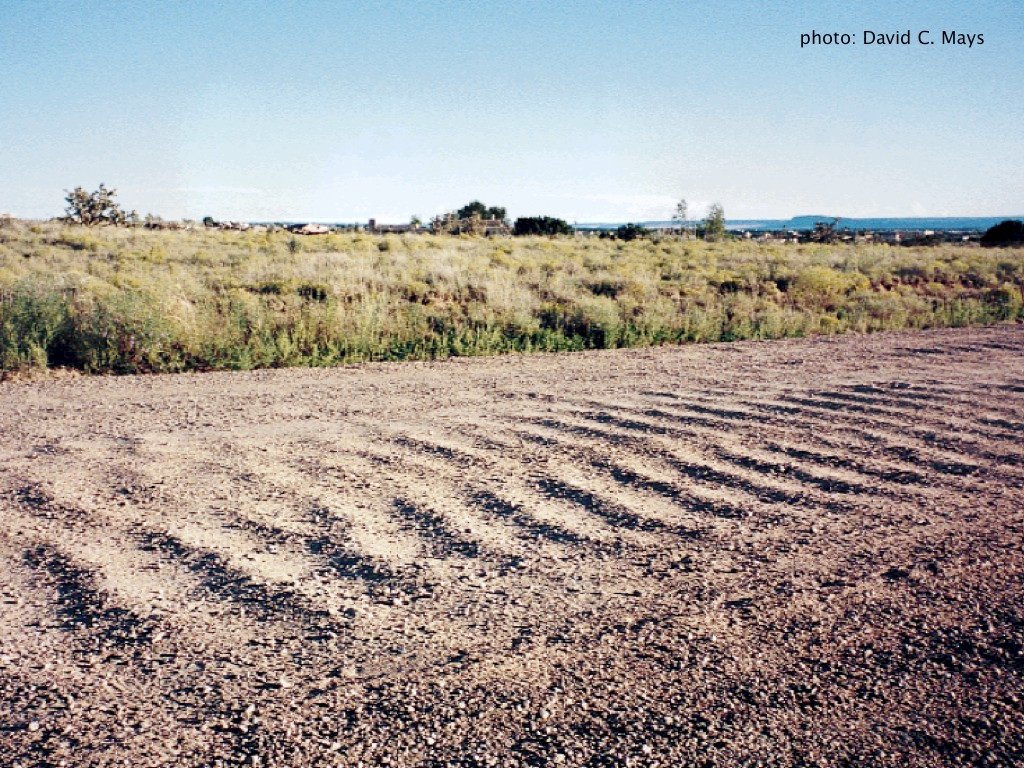
On Wednesday, during his seminar, he made fun of string theorists and high energy physicists. Professor Morris studies patterns in nature such as icicles or washboard roads or the patterns that syrup makes as it is poured. He said, "You don't have to go to the edges of the Universe to find beauty, and you don't have to go to the LHC. The type of beauty in icicles or washboard roads is the type of beauty that a 3-year old could watch and be fascinated by." In fact, the laboratory-grown stalactites did fascinate me and was the reason why I chose to work in his lab for the summer. I love his mentality and it reminds me of why I chose to major in physics in the first place. Amidst the research of Quantum Gravity and The Higgs Boson and The Behaviour of Gold Atoms at 2 K Under 5 atm, his studies of pattern formation are a breath of fresh air: ordinary, yet fascinating.

He said that, more often than not, string theorists try to fit the data into their theories, instead of their theories into the data. Perhaps, then, scholars of physics and English literature are not that different after all: they both see in their subject the things they wish to see.

Finally, he said "Physicists should be able to do things. If we were placed on an island, we should be able to build a BlackBerry in a given amount of time." That's an interesting take on the role of a physicist. Before this summer, I liked the idea of being a theoretical physicist, of playing with symbols in my head and somehow discovering their relationships. But Professor Morris's opinions must have affected me, because I no longer feel that way. I don't see how sitting in front of a computer playing with math would make me useful to society. I want to be able to do things too. I want to write. I want to express my opinions and inspire people and help change society.

My coworker told me to learn the Fourier Transform well. "It's the most important thing you'll ever learn." With my current career plan, I somehow doubt that this will be true - I doubt I'll need to Fourier transform my writing - but who knows?